Tag Archives: Budo

Martial Arts Restaurants in Tokyo

An essential stop for the martial artist visiting #Tokyo is Gonbachi restaurant. This restaurant located at the corner of Roppongi Dori (Road) and Gaiennishi Dori. This is just a few blocks from Roppongi Station metro in the famous nightclub district. This restaurant was the inspiration for the Kill Bill Crazy 88 fight scene. There is a small garden in the front for outdoor dining and a large area for diners indoors. On the way in note the pictures of the owner with celebrities including Quinton Tarantino.  A complete lunch here runs about ¥1200 (about $10 USD). The lunch menu is somewhat limited offering three or four “set meals”. This style of lunch is quite common in busy Tokyo. But the food is good and the service is excellent. And the very best part of this culinary experience is watching the scenes around you remembering the Kill Bill fight scene.

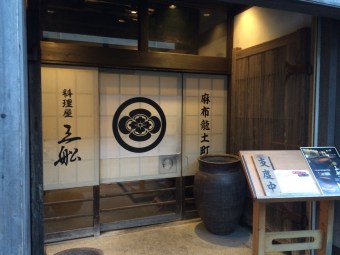
Another restaurant not to be missed in Tokyo’s Roppongi nightclub district is Mifune’s restaurant named after the legendary samurai actor Toshiro Mifune. There one can get a great lunch for about $10 (¥1200). This is a must stop for all samurai fans.
 

Mifune (7)

Mifune (1)

You have to remove your shoes upon entering this restaurant; a practice fairly common in many Japan businesses with tatami mats.  The interior of this restaurant is warm and inviting. Most of the seating is “horigotatsu” style. This is where you sit around a low table on tatami mat floor, but the floor under the table is dug out so you have leg space as if you were seated at a regular western style table.  Mifune (3)

These are just two of the martial arts related restaurants in Tokyo. These restaurants are a “must see” for Kendo practitioners and fans of the Bushido culture. There is also a “ninja” themed restaurant in nearby Akasaka which I will review in another post.
Hattori Hanzo

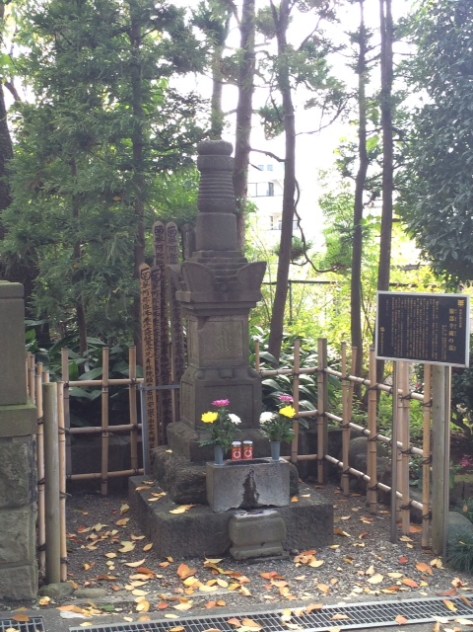
Hattori Hanzo is probably the most famous ninja in history thanks to the media. His name became known in pop culture with the film Kill Bill. Fans of Japanese martial arts can visit his resting place in Tokyo.

Hitori Hanzo
Grave site of Hattori Hanzo

Hattori was a real character (actually five members of that family had that name) and leader of the Iga clan. Hattori II was the most famous rising to prominence during the Sengoku period. He is credited with saving the life of Tokugawa Ieyasu. This act and his continuing service allowed Tokugawa to become the first Shogun (military ruler) of Japan shortly after Hattori’s death.  Japan thus entered the Edo period, a time of relative peace.

In Tokyo, the imperial palace has Hanzō’s Gate which is named after him as is the Hanzōmon subway line and station. The neighborhood outside Hanzo’s Gate used to be known as Iga-cho (Iga Town) because ninja from Iga province lived there. Hanzō’s remains now rest in the Sainen-ji temple cemetery in Yotsuya, Tokyo. The temple also holds his favorite spear and his ceremonial battle helmet. This place is definitely worth a visit if you are a fan of ninjitsu or even just a martial artist visiting Japan. 

Karate: A Tokyo 2020 Olympic Event

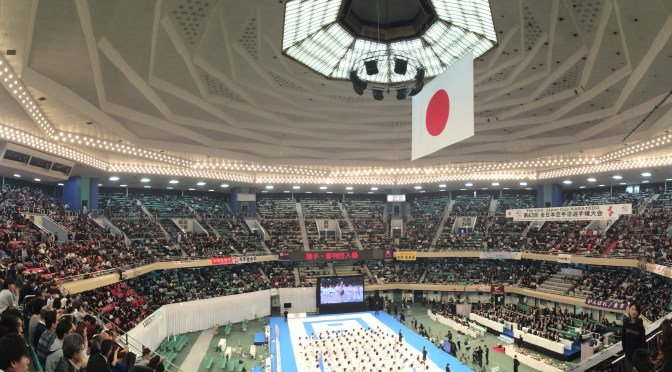
In August, 2016, Karateka (Karate practitioners) worldwide welcomed the International Olympic Committee (IOC) decision to include that sport in the Tokyo 2020 Olympics. Karate competitions will include Kumite (fighting) and Kata (forms).  The IOC had rejected the sport on three earlier occasions.

Karate is believed to have its origins from Chinese Kempo (Kung Fu). The Japanese Karate Do “way of the open hand” martial art began about 500 years ago in Okinawa under the dynastic reign of King Shoha. Shoha and subsequent Japanese rulers forbid ownership of weapons on the island giving rise to local Okinawans developing an unarmed self defense method. From that beginning, Karate evolved into a structured system spreading to mainland Japan and throughout the world. Today, Karate emphasizes all the things we as humans hope to see in humanity: respect for others, courtesy, dedication, honor, violence as a last resort for defense, health and fitness, and self enlightenment. The practice currently boasts 50 million practitioners worldwide.

43 Japan Karate Do (3)
Karate is widely practiced in Japan

In the Olympics, the Kumite sparring matches will be non-contact. This more often actually translates to “light contact” but does force competitors to have complete control over their punches and kicks. Winners are decided by accumulation of points. Kata are a series of movements done to simulate defense against attacks from multiple opponents. Kata demonstrations are judged on power, precision of technique, balance, and rhythm. Women and men will compete separately in forms and Kumite. Kumite will include three weight classes.

The addition of Karate in the 2020 Olympics is an extraordinary opportunity for Japan to showcase aspects of its Budo culture. Like many other Japanese martial arts, Karate is ingrained in modern Japanese culture and practiced widely throughout the country.  While reliable statistics are not available, over the last few decades well in excess of 100 million people worldwide practiced some form of Japanese martial arts. How many other countries can claim to have positively influenced that number of people in the world? Japan can rightfully claim to have a far reaching influence on world culture.

The build up to 2020 will an opportunity for Japan. It will be an opportunity to highlight to the world just how significant a role Japanese culture plays in everyday life.

Nikko and the Procession of Warriors

The “procession of warriors” is a biannual event at the Nikko shrine. This event hosted each year in May and October. It commemorates the Tokugawa Shogunate, specifically Tokugawa Ieyasu who founded the Shogunate which ruled in peace for 250 years. The complex which contains over a dozen buildings, is the final resting place of Tokugawa Ieyasu.  The Buddhist temples and Shintoist shrines here are nothing less than spectacular.  The sense of samurai history is even overwhelming.

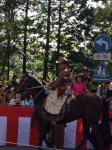
The high point of this days in May and October feature a procession of 1000 samurai. re-enacting the re-internment of Tokugawa remains at Nikko.

During this festive occasion there are also demonstrations of martial skills such as Japanese archery (Kyudo) from horseback. Samurai were often expert horseman and had extraordinary combat skills in mounted archery.

The Tokugawa shogunate was the last feudal Japanese military government, which existed between 1603 and 1867.  Nikko is a World Heritage Site with five major temples and shrines and several minor facilities. Nearby is the Imperial summer palace. (or villa). The villa has 106 rooms and was erected in Nikko in 1899, using parts of a Tokyo residence that originally served the Tokugawa family and then was part of the Imperial Palace.

Nikko is located in the mountains and is a 90 minute train ride from Tokyo. It is a must see for the martial artist (or anyone else) visiting Japan.


Samurai at the Imperial Palace


For over two hundred years samurai protected the Imperial Palace in Edo (now Tokyo). One of the more notable parts of the palace grounds is the complex of Samurai guard houses. There are three guardhouses (bansho) remaining all generally located near the East Gate of the Imperial Palace grounds.  The East Gate was the main gate for the Edo Castle during the Tokugawa reign.

Just behind (and above) this guard house one can see another building protruding. This smaller building actually lies just outside the gate (but still on the Palace grounds). The building is a large Dojo and Imperial Palace guards train there daily in Kendo.

The guard house pictured above is the largest of remaining guard houses and located just inside the East Gate entrance area. It is called the “100 person 3rd guardhouse” – Hyakunin Bansho. As its name would imply this building housed approximately 100 samurai, chosen from the four main branches of the Tokugawa clan. The 100 samurai housed in this building and worked in shifts.

Samurai were assigned to one of three duties at the Palace: The stand and return (tachi-kaeri) retainers accompanied each diamyo from his domain to Edo. The samurai stationed in Edo (edo-zume) served the diamyo while at the Edo estate and back to his domain.  The samurai permanently stationed in the capital (joofu) served exclusively in Edo.

Next to the East Gate guard house (on top) is a small garden. The gate house is on the way to the East Gardens.


imperial-palace-samurai-guard-house-1

imperial-palace-samurai-guard-house-6


The Imperial Palace grounds are a must see during the Sakura blossom season (mid March – Mid April). The views at this location are stunning during that time of year.


Budo Seminars for Foreigners

International Budo University

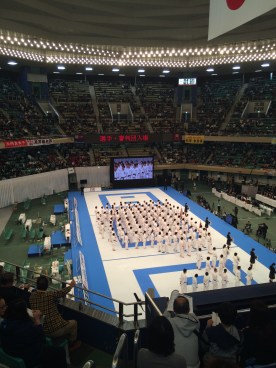
Each year in early March the International Budo University in Chiba, Japan hosts a three day seminar on Budo Spirit. During this three day seminar martial artists receive intensive instruction on Japanese martial arts (Kendo, Judo, Kyudo, Sumo, etc.) and the spirit of Budo. Seminar participants are allowed to pick two Japanese martial arts for intensive instruction.

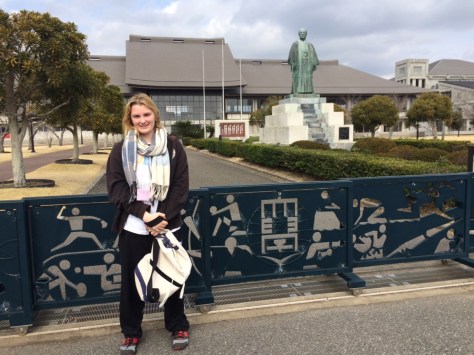
Front entrance to IBU
Front Entrance to IBU

The IBU campus overlooks the Pacific Ocean from the mountains above Katsuura City, Chiba Prefecture. The train station is a fifteen-minute walk from campus, and Tokyo is about one and a half hours away by Limited Express train (That’s the fastest of the local trains).

Since its founding in 1984, International Budo University has evolved into one of Japan’s top-tier private sports school as well as one of the world’s few research institutions in the field of Budo studies (I’m guessing all the rest are also in Japan). IBU has over 2000 students. Teaching and research encompasses a wide variety of Budo related subjects including Budo culture, Budo education, the internationalization of Budo, Budo and the impaired, and Budo history. The university also offers programs in sports science, sports management, coaching science, athletic training, exercise science, health science, sports education, and sports business.

IBU is an attempt to internationalize the Japanese philosophy of Budo. The University conducts seminars for foreign Budo practitioners.  Also, their one-year intensive course (plan on hard training at least six hours per day) is designed to give twenty foreign practitioners of Judo or Kendo the requisite knowledge and training to teach Budo in their home countries.

ibu-1
A Sumo class during the three day Budo seminar


47 Ronin Gravesite Sengakuji Temple

The grave site of all 47 ronin is at  Sengakuji Temple in central Tokyo, located just a few blocks from Sengakuji Train Station (Toei Asakusa Line and Keikyu Main Line). The graves and their master Lord Asano are maintained in a garden on the grounds.

The revenge of the forty-seven rōnin (四十七士 Shi-jū-shichi-shi?), also known as the Akō incident (赤穂事件 Akō jiken?) is a historical event in Japan that occurred in 1702. At that time a band of rōnin (leaderless samurai) avenged the death of their master Lord Akira. 

This famous story tells of a group of 47 samurai who were left leaderless (becoming rōnin) after their Daimyo (feudal lord) Asano Naganori was ordered to commit seppuku (ritual suicide) for assaulting another Diamyo named Kira Yoshinaka. As the story goes, Lord Kira regularly taunted Asano for his lower class roots. Eventually, Asano drew his katana and cut Kira’s face. Drawing a sword on imperial grounds was punishable by death.


img_4177

The 47 samurai – now rōnin – pretended to disband after their diamyo’s death. Lord Kira employed spies to report on their activities because revenge from these samurai was a real possibility.

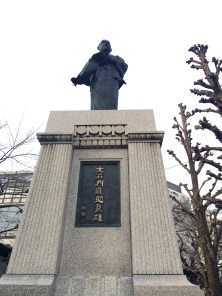
There are many legends around the acts of the 47 ronin during this time period. Originally there were more than 50 plotters but several dropped out. Led by the first retainer Ôishi Kuranosuke Yoshio (photo left), the 47 disbanded. Many fell into poverty. The legends say that to deceive Kira’s spies some left their families and more fell into drunkenness – most notably Ôishi (although he had already had quite a reputation for drinking and prostitutes). In any case, they waited for about 18 months to deceive Kira’s spies. They avenged their master’s honor by killing Kira in 1702. It should be noted that they also killed Kira’s guards and household staff in the process.

The Shogun ordered the 47 ronin to commit seppuku for the crime of murder. This true story was popularized in Japanese culture as emblematic of the loyalty, sacrifice, persistence, and honor that people should preserve in their daily lives. The popularity of the tale grew during the Meiji era; a time when Japan underwent rapid modernization and wide scale exposure to foreign values. The story became entrenched within discourses of national heritage and identity.

The photo on the left shows the well where the 47 samurai washed the severed head of their enemy Lord Kira before presenting it at the grave of their fallen master Lord Asano (right photo).

The Sengakuji Temple has an event every December 14th to commerate the 47 rōnin. It is open everyday and free to visit. Place incense sticks – 100¥(about 85 cents US) for a large pack, sold on site – to honour the dead. For a martial artist this is a moving experience not to be missed. Japan #martialart #budo  #katana