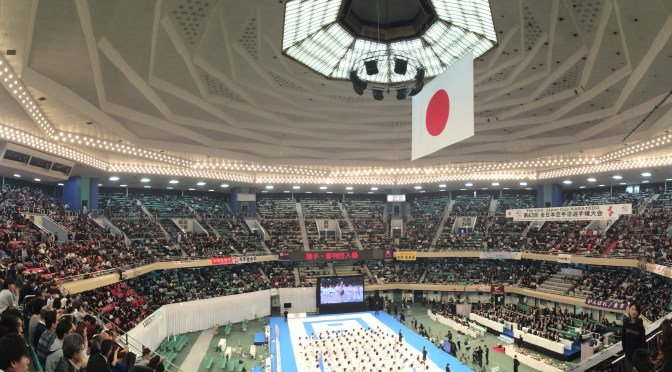
In August, 2016, Karateka (Karate practitioners) worldwide welcomed the International Olympic Committee (IOC) decision to include that sport in the Tokyo 2020 Olympics. Karate competitions will include Kumite (fighting) and Kata (forms). The IOC had rejected the sport on three earlier occasions.
Karate is believed to have its origins from Chinese Kempo (Kung Fu). The Japanese Karate Do “way of the open hand” martial art began about 500 years ago in Okinawa under the dynastic reign of King Shoha. Shoha and subsequent Japanese rulers forbid ownership of weapons on the island giving rise to local Okinawans developing an unarmed self defense method. From that beginning, Karate evolved into a structured system spreading to mainland Japan and throughout the world. Today, Karate emphasizes all the things we as humans hope to see in humanity: respect for others, courtesy, dedication, honor, violence as a last resort for defense, health and fitness, and self enlightenment. The practice currently boasts 50 million practitioners worldwide.
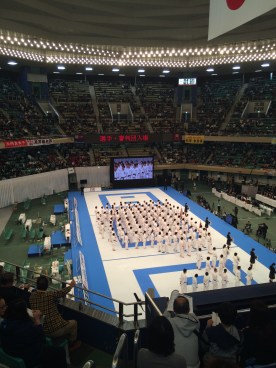
In the Olympics, the Kumite sparring matches will be non-contact. This more often actually translates to “light contact” but does force competitors to have complete control over their punches and kicks. Winners are decided by accumulation of points. Kata are a series of movements done to simulate defense against attacks from multiple opponents. Kata demonstrations are judged on power, precision of technique, balance, and rhythm. Women and men will compete separately in forms and Kumite. Kumite will include three weight classes.
The addition of Karate in the 2020 Olympics is an extraordinary opportunity for Japan to showcase aspects of its Budo culture. Like many other Japanese martial arts, Karate is ingrained in modern Japanese culture and practiced widely throughout the country. While reliable statistics are not available, over the last few decades well in excess of 100 million people worldwide practiced some form of Japanese martial arts. How many other countries can claim to have positively influenced that number of people in the world? Japan can rightfully claim to have a far reaching influence on world culture.
The build up to 2020 will an opportunity for Japan. It will be an opportunity to highlight to the world just how significant a role Japanese culture plays in everyday life.

 Martial Arts of Japan